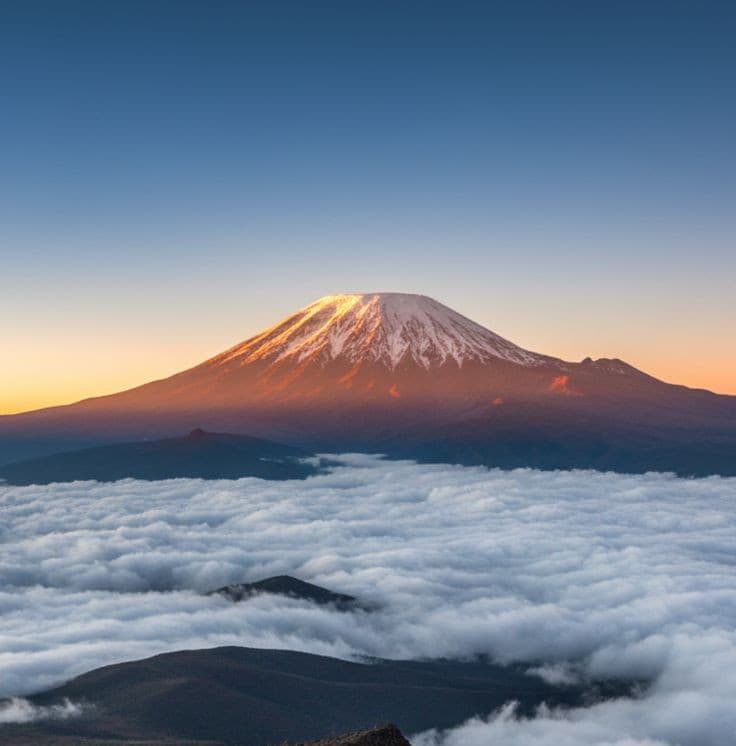
“Standing at 5,895 meters (19,341 feet), Mount Kilimanjaro is Africa's highest peak and the world's tallest free-standing mountain. Unlike technical climbs requiring ropes and ice axes, Kilimanjaro is a trekking peak accessible to anyone with reasonable fitness, proper preparation, and determination.”
Each year, approximately 35,000 adventurers attempt the summit, with success rates varying from 45% to 85% depending on the route chosen and acclimatization time. This comprehensive guide covers everything from route selection to packing lists, helping you maximize your chances of standing on the Roof of Africa.
Understanding the Challenge
While Kilimanjaro doesn't require technical climbing skills, it presents significant challenges. Altitude sickness affects 25-30% of climbers, and the summit night involves 6-8 hours of hiking in sub-zero temperatures at extreme altitude. Success requires physical fitness, mental resilience, and proper acclimatization.
Success Rate Reality: Overall summit success rate is approximately 65%. Choosing longer routes (7+ days) increases success to 85%+ due to better acclimatization. Rushing with 5-day routes drops success to 45-50%.
Route Comparison: Finding Your Path
Machame Route (Whiskey Route)
Duration: 6-7 days
Difficulty: Moderate-Difficult
Success Rate: 85%
Most popular route offering excellent acclimatization through 'climb high, sleep low' profile. Scenic variety from rainforest to alpine desert. Steep sections challenge fitness but reward with stunning views.
Marangu Route (Coca-Cola Route)
Duration: 5-6 days
Difficulty: Moderate
Success Rate: 50-60%
Only route with hut accommodation (no camping). Gentler gradient but poorer acclimatization profile. Popular with budget-conscious climbers but lower success rate due to shorter duration.
Lemosho Route
Duration: 7-8 days
Difficulty: Moderate
Success Rate: 90%+
Premium route with highest success rate. Approaches from west through pristine wilderness. Excellent acclimatization and minimal crowds. More expensive but worth every penny.
Rongai Route
Duration: 6-7 days
Difficulty: Moderate
Success Rate: 80%
Only route approaching from north (Kenya border). Drier climate means less rain. Gentler gradient suitable for less experienced trekkers. Less scenic than southern routes.
Physical Preparation Timeline
3-6 Months Before
Base Fitness Building- Cardiovascular training 4-5x weekly (running, cycling, swimming)
- Leg strength exercises (squats, lunges, step-ups)
- Core strengthening (planks, Russian twists)
- Weekend hikes with weighted backpack (start with 10kg)
2 Months Before
Endurance & Altitude Simulation- Increase hike distance to 15-20km with 15kg pack
- Stair climbing with weight (simulate mountain ascent)
- Yoga for flexibility and injury prevention
- Practice hiking poles technique
1 Month Before
Tapering & Final Prep- Reduce intensity, maintain frequency
- Break in hiking boots completely
- Test all gear on overnight hikes
- Consult doctor for altitude medication (Diamox)
1 Week Before
Rest & Recovery- Light exercise only (walking, stretching)
- Hydrate extensively (3-4 liters daily)
- Sleep 8+ hours nightly
- Avoid alcohol and caffeine
Essential Packing List
Clothing Layers
- Moisture-wicking base layers (2-3 sets)
- Insulating mid-layer (fleece or down jacket)
- Waterproof outer shell (jacket and pants)
- Thermal underwear for summit night
- Warm hat, gloves, buff/balaclava
- Hiking socks (merino wool, 4-5 pairs)
- Broken-in hiking boots (ankle support essential)
Essential Gear
- Sleeping bag (-10°C to -20°C rated)
- Trekking poles (collapsible, carbon fiber)
- Headlamp with extra batteries (summit night)
- Sunglasses (UV protection, category 3-4)
- Sunscreen SPF 50+ and lip balm
- Water bottles/bladder (3-4 liter capacity)
- Personal first aid kit and medications
Rental vs. Bring Your Own: Most tour operators rent sleeping bags, trekking poles, and duffel bags. However, bring your own broken-in boots and moisture-wicking clothing. Ill-fitting rental boots cause blisters that can end your climb.
Altitude Sickness: Prevention & Management
Acute Mountain Sickness (AMS) affects 25-30% of climbers above 3,000 meters. Symptoms include headache, nausea, dizziness, and fatigue. Severe cases can progress to life-threatening HAPE (pulmonary edema) or HACE (cerebral edema).
Prevention Strategies
- Choose longer routes (7+ days) for gradual acclimatization
- Maintain slow, steady pace ('pole pole' as guides say)
- Stay hydrated (3-4 liters daily minimum)
- Eat regularly even if appetite decreases
- Avoid alcohol and sedatives
- Consider Diamox (acetazolamide) after consulting doctor
- Report symptoms immediately to guides
- Be prepared to descend if symptoms worsen
Best Time to Climb
Dry Seasons (Recommended)
Wet Seasons (Budget Option)
“Kilimanjaro doesn't care about your ego. Respect the mountain, listen to your body, and trust your guides. Summit success is secondary to returning home safely.”
Start Your Kilimanjaro Journey
Our experienced guides have led hundreds of successful summits. We prioritize safety, proper acclimatization, and personalized support.
About the Author
David Kimathi - Certified mountain guide with 150+ successful Kilimanjaro summits. Specializes in high-altitude trekking safety and preparation.